Decision guideUpdated August 31, 20261 exact Amazon listing
Cordless drill vs. impact driver
Start with the fastener and the material. A drill/driver has a chuck and clutch for controlled drilling. An impact driver takes hex bits and handles repetitive driving with more noise and less finesse near delicate surfaces. If you can only buy one tool, keep control and bit compatibility before chasing torque.
The decision
The chuck tells you how the tool works.
A drill uses a chuck and clutch for broad control. An impact driver uses a hex interface and impact mechanism for driving, with more noise and less finesse near delicate material.
The choice
Drill/driver
Impact driver
Interface
Keyless chuck accepts many bits
1/4-inch hex quick-change bits
Best fit
Drilling, small screws, anchors, finish work
Long screws, lag fasteners, repeated driving
Control
Clutch and variable speed
Trigger control plus impact action
Tradeoff
Can stall on high resistance
Louder and easier to overdrive a small fastener
Exact Amazon listings
One verified combo kit on this page.
As an Amazon Associate we earn from qualifying purchases.
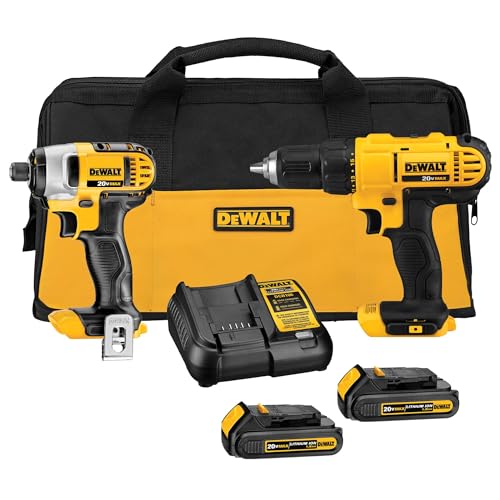
DCK240C2 / ASIN B00IJ0ALYS / Amazon affiliate link
DEWALT still lists DCK240C2: DCD771 drill/driver, DCF885 impact driver, two 1.3Ah batteries, charger, and bag. The current compact brushless combo on the same 20V MAX platform is ATOMIC DCK225D2. That successor is not a card here because this page has no verified ASIN, image, and listing for it.
Buy the kit when both tool roles repeat in your household. The included 1.3Ah batteries are the runtime limit, so label a charging home. Confirm the current kit contents before checkout because bundles can change.
Choose the toolUse the drill for holes and delicate screws. Use the impact driver when the fastener and material can take its impact action.
Use the right bitImpact-rated bits belong in an impact driver. Match the bit to the fastener head.
Set the controlStart slow, use the drill clutch when it fits the job, and stop before stripping or overdriving.
Charge and storeKeep batteries, bits, and the manual together so another adult can pick the correct tool.
Decision checkpoints
Add the second tool when resistance or bit changes slow you down.
A drill/driver is the right first power tool for most households. It drills holes, accepts round and hex shanks, and uses a clutch to limit overdriving on small hardware. An impact driver earns its place when long screws, deck fasteners, or repeated driving make the drill stall or force constant bit swaps.
An impact driver is not an impact wrench or a hammer drill. Match the chuck, fastener, and material to the tool that actually fits the job.