
Include the battery and charger unless batteries already on your shelf can cover the new job.
Home setup / EGO POWER+ platform
EGO Power+ 56V guide: batteries, first tools, and kits
Buy into EGO when at least two recurring outdoor jobs can share its 56V battery path. Start with the job that fails most often, choose a complete kit that sets up the next tool, and count the storage and charging work before expanding.
The second tool should reduce charger variety without creating a handling or runtime compromise.
Tools, batteries, chargers, attachments, receipts, and seasonal storage all need a home.
Fast decision
Let the most frequent job establish the platform
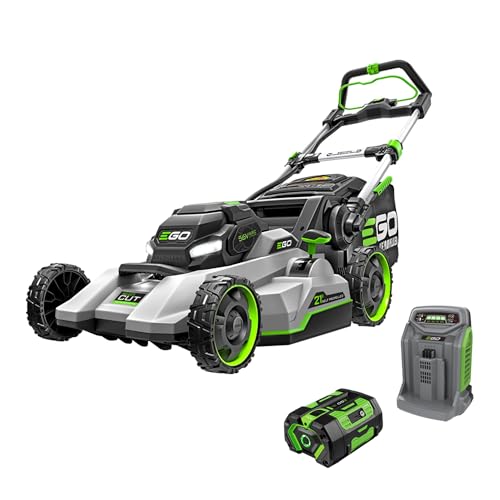
Mowing-led yardStart with the mower kit
A mower kit can establish the larger battery that later supports blowers, trimmers, and other high-load tools. Check gate width, slopes, runtime, folded size, and whether the battery weight works for the next handheld tool.
Compare EGO mowers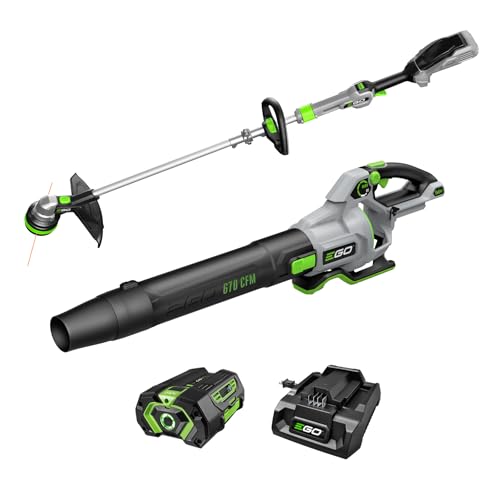 Trim and clear
Start with the combo kit
A trimmer and blower combo is the cleanest non-mower entry when both jobs recur. Confirm that the included battery covers both jobs in sequence and that neither tool is a compromise for the yard.
Compare trimmer and blower kits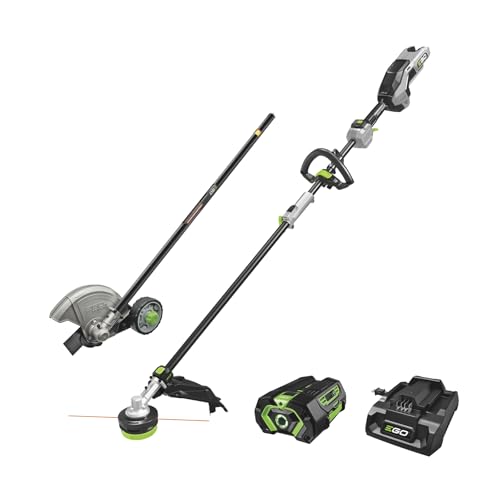 Several attachment jobs
Start with multi-head
A power head makes sense when trimming, edging, and a future pole saw or hedge trimmer are real jobs. It saves motors, not steps: every job still requires a safe attachment change and storage plan.
Compare multi-head setups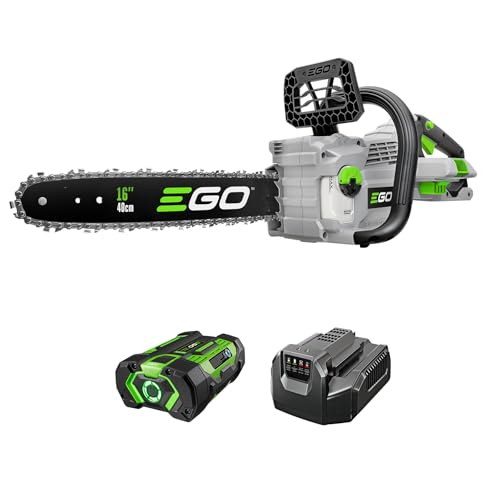 One occasional job
Do not force a platform
A chainsaw, snow blower, or pressure washer can be a valid EGO purchase, but one seasonal use does not automatically justify more tools. Compare the standalone tool on its own job, safety boundary, and storage burden.
Check seasonal toolsCompatibility
Every EGO 56V battery can fit; not every battery is a good working match
EGO's battery information says "ANY BATTERY POWERS ANY TOOL" and that all ARC Lithium batteries are compatible with its tools and chargers. That covers electrical compatibility. It does not choose the right weight, runtime, balance, charge flow, or battery count for your work. Check the exact tool manual before buying.
| Question | What compatibility answers | What it does not answer |
|---|---|---|
| Will it connect? | A current EGO 56V battery is designed for current EGO 56V tools. | Whether the exact tool manual has a minimum battery count or other setup rule. |
| Will it finish? | Amp-hours describe battery capacity. | Real runtime in tall grass, wet leaves, slopes, cold weather, or high-power modes. |
| Will it handle well? | The battery can power the tool. | Whether a larger pack makes a handheld tool tiring or poorly balanced. |
| Will it fit the routine? | One charger family can serve the platform. | Whether one battery can cover simultaneous work or must cool and recharge between jobs. |
Battery sizing
Choose capacity for the job; check weight and charge flow
Amp-hours (Ah) describe capacity. Use the listed watt-hours to compare stored energy, then check weight and charge flow. Watt-hours do not promise runtime or acreage.
| Pack | Wh | Weight | 700W Turbo | Rapid | 320W | Standard | Use lane |
|---|---|---|---|---|---|---|---|
| 2.5Ah | 140 | 2.77 lb | 30 min | 30 min | 35 min | 50 min | Usually handheld |
| 4.0Ah | 224 | 4.8 lb | 25 min | 30 min | 55 min | 80 min | Usually handheld |
| 5.0Ah | 280 | 4.87 lb | 30 min | 40 min | 70 min | 100 min | Cross-over |
| 6.0Ah | 336 | 6.2 lb | 35 min | 45 min | 80 min | 120 min | Cross-over |
| 7.5Ah | 420 | 6.31 lb | 45 min | 60 min | 100 min | 145 min | Usually mower/high-draw |
| 10.0Ah | 560 | 7.53 lb | 60 min | 75 min | 130 min | 190 min | Usually mower/high-draw |
| 12.0Ah | 672 | 7.9 lb | 75 min | 90 min | 160 min | 230 min | Usually mower/high-draw |
The use lane is editorial guidance. A 7.5Ah pack at 6.31 lb is a different handheld proposition from a 2.5Ah pack at 2.77 lb. Do not buy the largest pack by default.
Charging queue
Model the queue before you add a tool
Write down the pack, charger lane, and actual work sequence. EGO's listed charge times, from its battery information checked September 16, 2026, describe an empty-to-full charger wait, not how long a tool will finish a job. Use them for shelf planning only.
- One person, three jobs.For trim → mow → blow, one pack can move between tools when the actual work fits that pack and no next step needs it while it is charging. With a 4.0Ah example, the listed empty-to-full time is 30 minutes on Rapid, 55 minutes on 320W, or 80 minutes on Standard. Recharge or any required cooldown becomes the bottleneck when the next job is ready before the pack is ready.
- Two people, overlapping jobs.Shared compatibility means either tool can accept the battery. It does not make one battery enough for two active tools. Plan one pack per active tool, or write down the exact stagger. Two 4.0Ah packs would each have listed charge times of 30 minutes on Rapid, 55 minutes on 320W, or 80 minutes on Standard.
- Seasonal high draw.For snow or long leaf cleanup, count the packs, charger lane, and time between sessions. A 7.5Ah pack is listed at 60 minutes on Rapid, 100 minutes on 320W, or 145 minutes on Standard. If a dual-port charger is part of the plan, verify its exact listing or manual for simultaneous charging. For a tool used only in one season, off-season storage and the shelf footprint can matter more than the platform label.
Purchase math
Buy a kit when it solves a battery or charger gap
A bare tool looks cheaper because it removes the battery and charger. That is a real saving only when the batteries already owned can cover the new job without breaking the current routine. Compare exact contents, not only the tool model.
| Situation | Buy a kit | Buy bare tool |
|---|---|---|
| First EGO purchase | Yes. Establish the battery and charger with the first job. | No, unless a compatible setup is already available. |
| Jobs happen back-to-back | Often. A second battery keeps both jobs moving. | Only if existing capacity covers both jobs. |
| Jobs happen at the same time | Usually. Separate users need separate batteries. | Only with enough spare batteries already owned. |
| Several chargers already exist | Only if the battery value and size fit the plan. | Often the cleaner choice. |
| Included battery is a poor match | Recheck a different exact kit. | Possible, paired with the correct battery separately. |
Amazon prices, coupons, sellers, bundles, and kit contents change. Compare the current kit total with the current bare-tool-plus-battery plan on the day you buy.
Platform cost
Compare the whole setup, not the bare-tool line
Before opening an Amazon listing, write down every part of the setup. This tells you whether to buy a complete kit, a bare tool, or a different kit with a better-fitting included battery.
| Line item | Record | Why it changes the choice |
|---|---|---|
| First complete kit | Tool, included pack, charger, current listing total | Establishes the battery path and charger you will actually use. |
| Next bare tool | Tool model, current listing total, existing pack fit | Makes sense only when current batteries cover the new job. |
| Second pack if jobs overlap | Capacity, weight, current listing total | Keeps two active jobs from sharing one battery queue. |
| Charger or faster charger | Charger lane, listed full-charge time, current listing total | Shortens the shelf wait when the queue, not the tool, is the bottleneck. |
| Wall or shelf storage | Location, clearance, wall hardware, seasonal space | A platform still needs a dry, usable home between jobs. |
| Consumables and wear parts | Line, blades, chain, bags, guards, or other job-specific parts | The tool purchase is not the whole ownership setup. |
| Authorized dealer and warranty path | Seller, receipt location, registration, policy link | A familiar retailer page does not by itself establish authorization. |
Platform map
Use the pillar for fit; use child guides for model calls
The EGO catalog extends beyond mowers, trimmers, and blowers into chainsaws, hedge and pole tools, snow equipment, pressure washing, wet/dry vacuuming, and other outdoor work. Platform breadth matters only when those jobs exist at your house.
- Mowers.Choose by deck, drive, cut system, battery kit, slopes, gates, and storage. Use the EGO mower guide for exact model depth.
- Trimmers and blowers.Choose by cut width, line loading, airflow, balance, battery size, and whether a combo creates a real two-job path. Use the blower and trimmer guide.
- Multi-head.Choose by the attachments used each season, the swap routine, shaft storage, and the power-head kit. Use the multi-head guide.
- Seasonal and high-risk tools.Choose by the exact job and manual, not by platform loyalty. Chainsaw and snow work add safety, weather, storage, and battery-count boundaries.
After delivery
Make the shelf and handoff part of the purchase
- Record.Save the receipt, exact model, serial number, seller, battery, and charger. Register the product if it helps your support workflow.
- Place.Give batteries and chargers a dry location that follows the manual's temperature and ventilation limits.
- Label.Mark usual mower, handheld, or reserve packs when several adults share the tools.
- Use.Account for heavy-draw work, turbo modes, grass height, wet material, slopes, and weather when runtime changes.
- Reset.Remove the battery before cleaning, blade or line work, and attachment changes. Return batteries, nozzles, guards, manuals, and attachments to one visible home.
- Inspect.Stop using a damaged battery or charger. Follow EGO's support and manual instructions rather than improvising a repair.
Warranty and seller
Keep the receipt and verify the seller
For US consumer use, EGO currently states a five-year limited warranty on outdoor power equipment and a three-year limited warranty on batteries and chargers purchased from authorized EGO dealers. Some products or batteries may have different terms, and commercial use changes coverage. The current policy controls.
Before buying, confirm the exact seller is authorized, the listing is new rather than used or refurbished, the model and battery are the ones described, and the receipt will show the seller and purchase date. Marketplace placement on a familiar retailer page is not proof of authorization.
Platform comparison
Choose the platform that fits the work you actually have
EGO fits buyers who want current 56V breadth and will manage larger packs as the tool count grows. Start there when at least two recurring jobs fit that battery path.
Another platform may win for light handheld work, local dealer or service access, an existing battery shelf, or one isolated job. Compare the exact tool, pack, charger, and support path before the voltage label.
Limits before buying
Know what platform loyalty does not solve
Exact Amazon kits
Match one exact kit to the job that starts the platform.
Choose by job, included battery, and charger. Model, seller, price, and availability can change; confirm the full configuration on the listing.
| Best first lane | Exact kit | Why it fits | Tradeoff |
|---|---|---|---|
| Mowing-led yard | LM2135SP, 7.5Ah battery and charger | Establishes a larger battery for a recurring lawn job. | Check slopes, gate width, runtime, and folded storage. |
| Trim and clear | ST6703LB, 4.0Ah battery and charger | Starts two weekly jobs on one shelf. | One battery means the jobs run in sequence. |
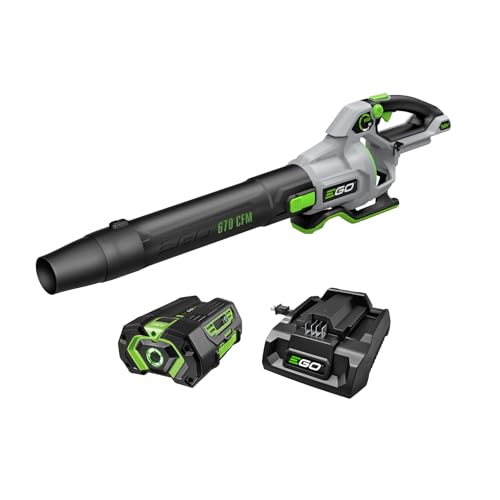
| Blower only | LB6703, 4.0Ah battery and charger | Direct path when trimming is already covered. | A single handheld job may not justify a platform. |
| Attachment path | MHC1603, 4.0Ah battery and charger | Trimmer and edger share one power head. | Every task includes an attachment swap. |
| Bounded storm work | CS1611, 2.5Ah battery and charger | Compact battery suits a handheld saw. | Higher safety boundary; not the default entry. |
As an Amazon Associate we earn from qualifying purchases.
Mower / ASIN B0857KWHHC
LM2135SP
A 21-inch Select Cut mower with Touch Drive self-propelled control and a 7.5Ah kit. A 21-inch deck is a middle path: confirm gate width, slopes, and storage before buying.
Combo / ASIN B0DY92S2VF
ST6703LB
One 15-inch POWERLOAD trimmer and 670 CFM blower kit with a 4.0Ah battery. One combo saves a purchase and a shelf, but it does not give the highest blower output.
Blower / ASIN B0BQQ9B2MD
LB6703
A dedicated 670 CFM handheld blower with a 4.0Ah battery and charger. Dedicated output is cleaner when trimming is already covered, but it is another tool to store.
Multi-head / ASIN B0CTY7ZNPD
MHC1603
The PH1420 power head, 16-inch trimmer, 8-inch edger, 4.0Ah battery, and 320W charger. Fewer motors and more attachment swaps. Buy it only when the swap routine is acceptable.
Seasonal / ASIN B09X26ZHPV
CS1611
A 16-inch chainsaw kit when pruning and storm cleanup are recurring, bounded jobs. A chainsaw adds a higher safety boundary and should not be the default first EGO purchase.
Seasonal lanes
Make seasonal equipment earn its footprint
Snow equipment needs clearing width, surface, battery count, charger flow, weather, and off-season storage checks. Pruning tools need a defined homeowner boundary, manual, protective equipment, and inspection routine. Pressure washers and vacuums need their own water, rated-output, cleanup, and storage review. Do not buy any of them merely because a compatible battery is already on the shelf.
Shared-tool handoff
Can another adult use this tomorrow?
- [ ] Charged state.Write down which pack is charged, which one is charging, and where the charger is.
- [ ] Installed attachment.Leave the correct attachment, guard, nozzle, or other job part installed and secure.
- [ ] Controls and PPE.Point out the controls, the required protective equipment, and the exact tool manual.
- [ ] Route.Mark the work area, travel route, gates, slopes, and the place to stop.
- [ ] Wet-weather veto.Do not start in conditions the tool manual does not allow. Stop if the route or material becomes unsafe.
- [ ] Jam and cleaning steps.Turn the tool off and remove the battery before clearing a jam, cleaning, changing line or blade, or changing attachments.
- [ ] Receipt and manual.Leave the receipt, model and serial details, manual, and warranty record in the marked storage location.
FAQ
Common EGO platform questions
Do all EGO batteries fit all EGO tools?
EGO says every 56V ARC Lithium battery works with every EGO 56V tool. Practical fit still depends on weight, runtime, battery count, balance, and the exact tool manual.
Which EGO battery should I buy?
Start with the battery included in the exact kit for the job that establishes the platform. Check whether its capacity and weight suit the second recurring job. Do not choose the largest pack automatically.
Is 7.5Ah better than 5Ah?
It holds about 50 percent more energy at the same 56V platform voltage, but it can cost and weigh more. Better depends on runtime, handling, charging, and the tool.
Should I buy a kit or a bare tool?
Buy a kit when you need another battery or charger, when jobs happen together, or when the included battery improves the platform plan. Buy bare tool only when current batteries can cover the new job without interrupting another one.
Is EGO worth it for one tool?
It can be if that exact tool wins on its job. One tool does not justify buying more platform products; revisit expansion only when another recurring job exists.
What warranty applies?
For US consumer use, EGO currently states five years for outdoor power equipment and three years for batteries and chargers from authorized dealers, subject to current terms and exceptions.