Decision guideUpdated August 10, 20261 exact Amazon listing
Garage fan: air path and storage
A garage fan moves air; it does not cool the room like AC. Pick diameter and mount based on whether you need coverage across a bay or airflow at a bench corner. Blocked intake, a closed garage, or a cord across the drive path can waste a strong fan.
The decision
Size and mount follow the room
Fan diameter and speed matter only if air can enter, cross the work area, and leave. A blocked intake or closed bay turns a high-velocity unit into noise and stirred dust.
The choice
20-inch high-velocity
Compact utility fan
Air path
Moves more air across a larger bay
Targets a bench or small corner
Placement
Floor or wall depending on model
Usually easy to carry
Control
Multiple speeds and tilt
Fewer settings, simpler reset
Tradeoff
More space and noise
Less reach across a garage
Exact Amazon listings
One listed model with floor or wall use
As an Amazon Associate we earn from qualifying purchases.
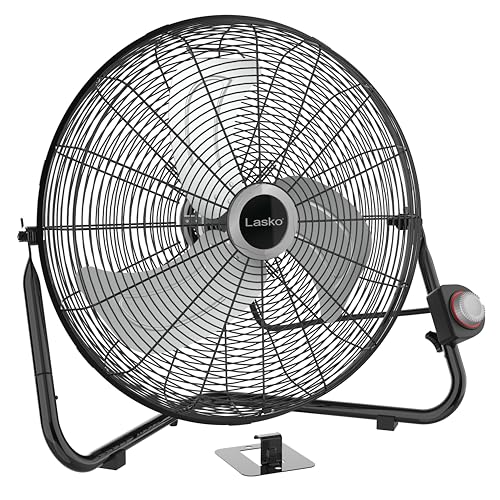
20-inch, three-speed fan with tilt and floor or wall mounting for garage and workshop airflow. The listing lists about 16 pounds. Follow the cord and wall-mount instructions for your placement, keep the intake clear, and clean the grille before dust builds up.
Open doors or windows only when the route makes sense for the space. Place the fan with a clear intake and aim the outlet across the work area, not at loose dust or people nearby. Route the cord out of drive paths, wet areas, and pinch points. Unplug before cleaning the grille, and store the fan where blades cannot be damaged.
Decision checkpoints
Place the fan where air can enter and leave
A high-velocity fan needs a clear intake, outlet, and path across the work area. Pointing a strong fan into a closed corner mostly adds noise and stirs settled dust.
Floor fans follow the project. Wall fans free floor space and keep the cord out of the vehicle path, but you lose mobility.
Workbench
Lower speed, focused aim
Direct airflow across the person and task without blowing hardware, sawdust, finish, or paperwork off the bench.
Whole bay
Door-to-door path
A larger fan works when air has somewhere to enter and exit. Keep the intake away from loose debris.
Dust or fumes
Fans are not the whole answer
A fan can spread dust or vapors. Collection, exhaust, respiratory protection, and product instructions may be the actual requirement.