Taller vertical storage
The 72-inch rack fits when ceiling height, bin count, and a higher published shelf rating matter more than moving the unit empty.

Home setup / garage storage
Measure the bay, bin footprint, and access aisle before comparing load ratings. A rack earns its space when containers fit without blocking the work path and you can secure the frame as directed. Note the heaviest item and shelf location before you load it.
Best fit
The 72-inch rack fits when ceiling height, bin count, and a higher published shelf rating matter more than moving the unit empty.
The 30-inch-wide rack suits tight bays. Leveling feet and two locking casters help during an empty reset.
Skip freestanding wire when depth, ceiling, or anchoring rules out a 14-inch-deep rack. Measure wall cabinets, pegboard, or a shallower format instead.
Spec table
| Decision factor | Amazon Basics SL-SUAM-117 | Seville WEB675 |
|---|---|---|
| Footprint | 36 in W × 14 in D × 72 in H | 30 in W × 14 in D × 60 in H on feet; 61.5 in on casters |
| Shelves | Five adjustable wire shelves | Five wire shelves; 1-inch height adjustments |
| Published shelf load | 350 lb per shelf; 1,750 lb total listed | 300 lb per shelf; 1,500 lb total on leveling feet |
| Mobility | Use the supplied feet and assembly guidance; no moving claim used here | Four casters, two locking, plus four adjustable leveling feet |
| Assembly | Tool-free wire-rack assembly on the Amazon listing | Tool-free assembly on the manufacturer specs |
| Buy around | Tall wall, taller bins, and maximum stationary capacity | Tight bay, lower ceiling, and occasional empty movement |
Format choice
Wire racks and closed cabinets solve different jobs. Wire works when bins need visible labels and airflow. Cabinets work when dust, spray, or casual access is the problem. This page compares two wire racks; use the table below when format, not brand, is the first decision.
| Decision factor | Open wire rack | Closed cabinet |
|---|---|---|
| Visibility | Bins and labels stay visible from the aisle | Contents hidden until the door opens |
| Dust and debris | Open sides collect garage dust; liners may help small parts | Doors reduce dust on stored items and chemicals |
| Bin fit | Standard tote depth must match the 14-inch shelf depth | Interior depth and door swing set the usable bin size |
| Footprint | Narrow depth; height uses ceiling | Door swing adds aisle clearance beyond shelf width |
| Access pattern | Fast grab for daily tools and labeled bins | Better when items stay put between seasons |
| Buy around | Labeled bins, frequent handoffs, and measured bay width | Paint, chemicals, or gear that should stay enclosed |
Use wire when the next person needs to see bin labels from the aisle and the 14-inch depth matches the containers you already own.
Use a cabinet when dust, overspray, or casual access is the problem and you can accept door swing in the aisle measurement.
When depth, ceiling, or anchoring rules out both wire and cabinet footprints, measure pegboard, wall rails, or bench-adjacent storage before buying another floor unit.
Amazon options
As an Amazon Associate we earn from qualifying purchases.
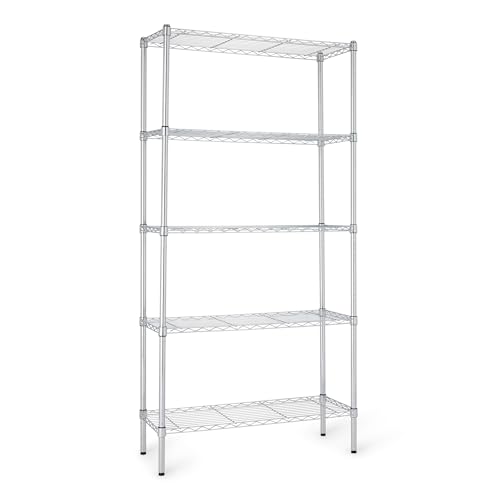
36 × 14 × 72 in / ASIN B01M0A4B9M
Five shelves with 1-inch adjustments and a published 350-pound-per-shelf rating for taller vertical storage. The wider, taller frame needs a measured wall and a stable permanent home.
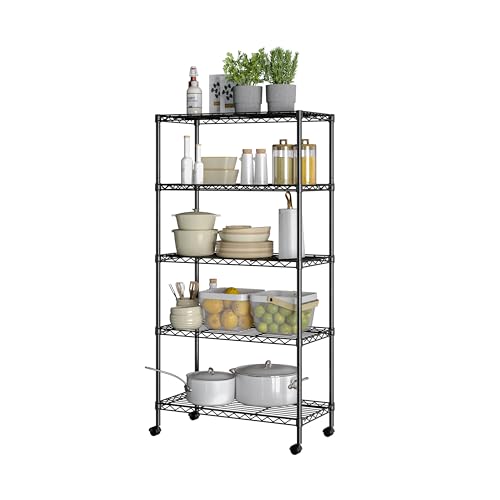
30 × 14 × 60 in / ASIN B08WJXGK54
Narrow wire rack with 1-inch adjustments, leveling feet, four casters, and two locking wheels. Less vertical storage than the Amazon Basics unit, and the full load rating applies on leveling feet, not while rolling.
Storage routine
Measure width, depth, ceiling, door swing, outlet access, and assembly path before ordering. Put dense bins and tools on lower shelves with a clear label on every level.
Level the frame, lock casters where supplied, and follow anchoring guidance for the exact rack. Balance the load across shelves; published capacity is not permission to overload a corner. Move the rack only when unloaded and the path is clear. Return bins to their labels after every project.
Decision checkpoints
A unit can fit the wall and still waste space if bins, tools, and seasonal gear do not match its depth and spacing. Inventory the largest container, heaviest shelf load, and items you reach for often before choosing a frame.
Published capacity assumes correct assembly and even load. Wall condition, floor level, casters, and anchoring change how safely the shelf works in your room.
Chargers, common hardware, and repair kits should sit where the next person can see them from the aisle.
Dense containers belong on lower shelves, within both per-shelf and total-unit limits.
Holiday, yard, and weather gear can live higher when the bin and how you get it down are planned.
FAQ
No. A taller rack wins only when the ceiling, reach, and anchor plan fit. A shorter rack can be easier to hand off and safer in a tight bay.
Use casters only for an empty reset and only when the exact product guidance supports the load. Lock them for stationary storage.
Bins, small parts, and loose hardware may need liners or trays. Choose a liner that fits the exact shelf dimensions and does not block a stable load.