20V MAX already in the house
Works away from the cabin socket when the right battery is charged. Digital gauge and auto-shutoff.

Car setup / pressure
12V clamp compressors stay tied to the battery. Battery-platform inflators move with you but need a charged pack. Match cord length, gauge behavior, and shutoff to the valve you will actually reach at the roadside.
Best fit
Works away from the cabin socket when the right battery is charged. Digital gauge and auto-shutoff.
Direct clamps, long hose, no battery ecosystem. Engine-running workflow per the manual.
Gauge, adapters, cables, and placard reference with the inflator. Check power before the warning light, not after.
Spec table
| Decision factor | DEWALT DCC020IB | VIAIR 88P |
|---|---|---|
| Power | 20V MAX battery, 12V DC, or 110V AC option; battery, charger, and AC adapter are separate on the tool-only configuration. | 12V direct battery clamps; engine-running use is part of the operating workflow. |
| Pressure control | Digital gauge and automatic shutoff. | 120 PSI gauge and manual control; no digital auto-stop claim used here. |
| Reach | 12V power cord and stored high-pressure / high-volume hoses. | 10 ft power cord, 16 ft air hose, twist-on chuck, and clamps. |
| Published capacity | High-pressure and high-volume modes; use the manual for the exact duty limits. | 1.47 CFM free flow; 25 minutes at 30 PSI duty cycle. |
| Storage | Onboard accessory storage; battery platform adds a charge check. | Compact compressor with loose clamps and hose that need a dedicated pouch or case. |
| Critical tradeoff | A bare tool is not a ready kit if the correct battery is not charged. | Direct clamps avoid a battery ecosystem but require access to the vehicle battery and safe cable routing. |
Amazon options
As an Amazon Associate we earn from qualifying purchases.
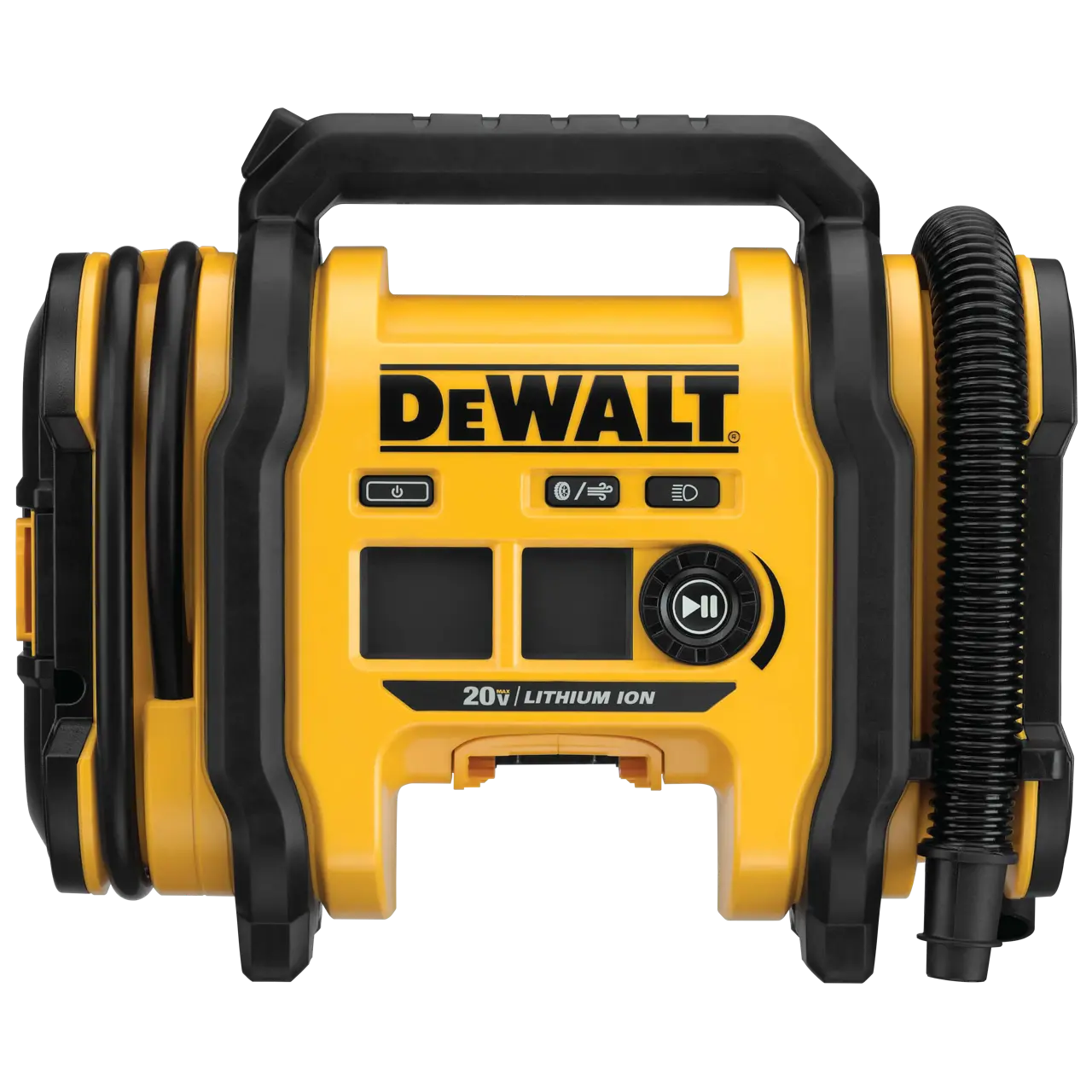
20V ecosystem / ASIN B07H39S9JQ
Digital gauge, auto-shutoff, high-pressure and high-volume modes, 20V MAX / 12V DC / 110V AC input paths on the tool.
Note: Amazon listing is tool only. Battery, charger, and AC adapter are separate purchases.
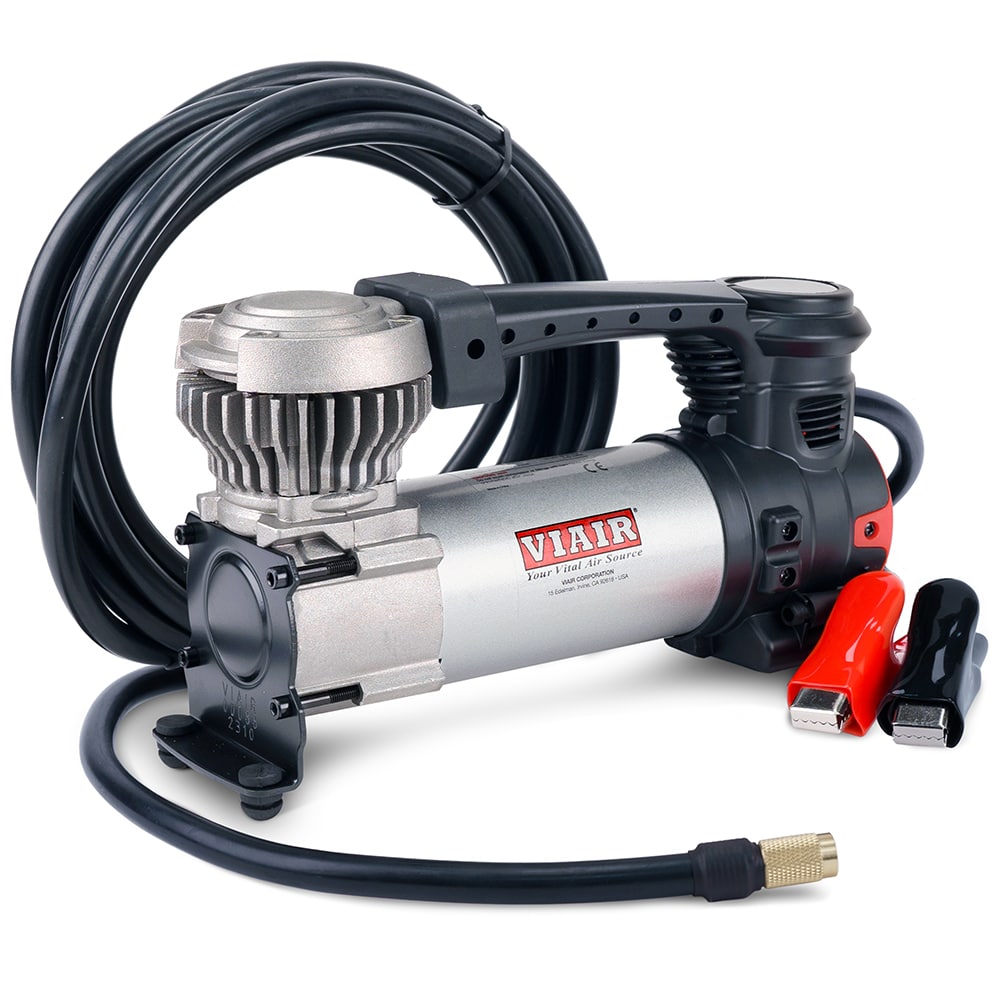
12V direct battery / ASIN B005ASY23I
120 PSI gauge, 16 ft hose, about 1.47 CFM free flow, and a 25-minute duty cycle at 30 PSI with direct battery clamps. There is no cabin 12V plug, so route cables safely and follow engine-running instructions in the manual.
Safe use
Decision checkpoints
The placard gives cold pressure. The inflator must reach each valve, run from the power you keep in the car, and finish without exceeding its duty cycle.
Auto-stop simplifies a top-up. It does not find a puncture, verify gauge accuracy, or decide if the tire is safe to drive.
Set placard pressure, watch the first fill, compare with a second gauge when accuracy matters.
Low tire far from the outlet? Length and sustained operation matter.
An inflator cannot make a damaged tire roadworthy.
FAQ
Only with a charged matching battery or the cords and adapter you need. Listing is tool only.
VIAIR 88P avoids the cabin socket current limit. You gain cable routing work and must follow clamp and engine-running instructions.
Gauge, adapters, power leads, gloves, placard reference, spare and jack location. The compressor is one piece of a roadside plan.