
12/24V DC or included AC adapter, according to its listing.
Car setup / road-trip food storage
12V car fridge or rotomolded cooler: choose by power and ice.
Choose the BougeRV fridge when its listed 12/24V DC or 100–240V AC power options fit your trip; choose an ice cooler if you can pack ice and have cargo room. Compare the listed capacities, then measure your vehicle space.
45-quart listing capacity with ice-packing guidance.
Listing says 84 cans and ice up to 5 days at 90°F.
Fridge and cooler options
What job does each listing cover?
The fridge is the only powered-cooling option. YETI and Coleman use ice; the GB40 is roadside gear, not a fridge power source.
Buying through our Amazon links costs you nothing extra and helps us keep DadSetup free to read. As an Amazon Associate we earn from qualifying purchases.

Powered cooling
BougeRV 50-quart 12V refrigerator
Listing details: 50 qt capacity, 12/24V DC, and an included 100-240V AC adapter. The listing says ECO mode is typically below 30W and the unit can reach -4°F at 90°F ambient.
Plan for: a compatible outlet or adapter and cargo room for the refrigerator, its handle, and its cable.
View on Amazon
Rotomolded ice cooler
YETI Tundra 45
Listing details: 45 qt capacity. The listing gives a 26-can count at a 2:1 ice-to-contents ratio, 54 cans without ice, or 37 lb of ice alone.
Plan for: the ice-to-food mix you intend to pack. The listing says ice retention depends on pre-chilling, ice ratio, and limiting lid openings.
View on Amazon
Wheeled ice cooler
Coleman Xtreme 50-quart wheeled cooler
Listing details: 50 qt capacity, wheels, and a telescoping handle. Coleman says it holds up to 84 cans and keeps ice up to 5 days at temperatures as high as 90°F.
Plan for: wheel and handle clearance in the cargo area, plus the food-and-ice layout you expect to carry.
View on Amazon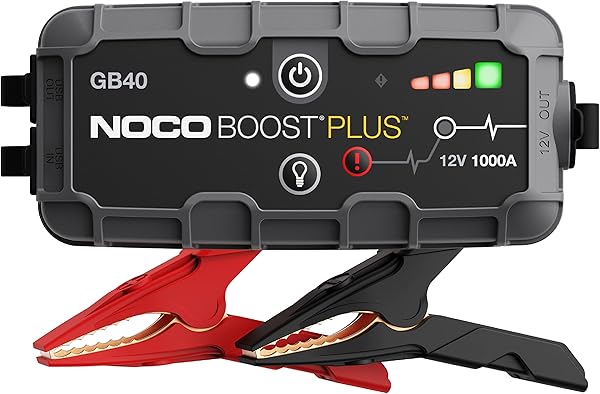
Separate roadside gear
NOCO Boost GB40 jump starter
Listing details: portable 12V lithium jump starter with a USB power bank. It is a roadside item, not the refrigerator's listed 12/24V DC or AC supply.
Plan for: keeping the fridge's power choice separate from your jump-start kit.
View on AmazonChoose by cooling method
Do you have power or plan to pack ice?
You have a compatible power pathCompare the BougeRV fridgeThe listing gives 12/24V DC and an included AC adapter.Check the power details
You plan to pack with iceCompare the Tundra 45Use its published capacity and ice-to-contents guidance to plan the load.Check cooler capacity
You want wheels on the coolerCompare the Coleman 50 qtThe listing includes wheels, a telescoping handle, and an 84-can claim.Check the wheeled option
Capacity and power
What do the published details show?
| Decision factor | BougeRV 50 qt fridge | YETI Tundra 45 | Coleman 50 qt |
|---|---|---|---|
| Cooling method | 12V refrigerator/freezer; listing includes 12/24V DC and an AC adapter. | Hard cooler packed with ice. | Wheeled hard cooler packed with ice. |
| Published capacity | 50 qt. | 45 qt; 26 cans at a 2:1 ice-to-contents ratio, per listing. | 50 qt; up to 84 cans, per listing. |
| Power or ice detail | ECO mode is typically below 30W, per listing. | Listing also gives 54 cans without ice or 37 lb of ice alone. | Listing says ice up to 5 days at temperatures as high as 90°F. |
| Moving it | Wheels and telescoping handle. | Molded tie-down slots accept straps or rope. | Wheels and telescoping handle. |
| Before the trip | Confirm the outlet, cable route, and room for the unit. | Plan the ice-to-food ratio and pre-chilling. | Plan the ice load and room for its wheels and handle. |
Capacity labels do not describe the cargo opening or the arrangement of your food. Measure the cargo bay and check that you can reach the lid, handles, cable, or drain in the position where the cooler will ride.
No-buy
When should you keep what you have?
Keep your current cooler if it fits the trip and your usual ice routine. A fridge adds a power requirement; replace a cooler only if its shape, capacity, or wheels would solve a packing problem. Measure the cargo area first.
Before loading
What should you check for cargo fit and power?
- Measure the cargo opening.Check the cooler or fridge dimensions against the opening, floor, and space needed to open its lid.
- Choose where it will sit.Leave room to reach the handle, cable, drain, or lid after bags and passengers are in place.
- For the fridge, identify the supply.Match the vehicle outlet or AC source to the inputs listed for the BougeRV model. Do not assume an outlet stays on with the vehicle parked.
- For an ice cooler, plan the load.Choose the food and ice arrangement before loading. YETI says pre-chilling, ice ratio, and lid openings affect retention.
- Keep roadside tools in their own role.A jump starter is for starting a vehicle. Use the refrigerator's listed power inputs for the fridge.
Read next
Related car setup guides
FAQ
Common questions
Does the BougeRV 50 qt fridge need vehicle power?
Its listing gives 12/24V DC inputs and an included AC adapter for 100-240V AC. It does not publish a parked-use time or a starter-battery cutoff setting for this listing.
How long does the YETI Tundra 45 hold ice?
The listing describes multi-day use but does not give a fixed number of days. It says results depend on pre-chilling, a 2:1 ice-to-contents ratio, and limiting lid openings.
Does 50 qt mean more usable storage than the Tundra 45?
The BougeRV listing gives 50 qt and the Tundra listing gives 45 qt. Those published capacities do not show how much room your food layout will use; ice also takes space in a cooler.
Can the NOCO GB40 run the refrigerator?
The GB40 listing describes a jump starter and USB power bank. It is not identified as the refrigerator's 12/24V DC or AC supply, so plan fridge power separately.