Within 6.0L gas or 3.0L diesel
Compact 2.4 lb body fits a glove box or small emergency bin when displacement matches.

Car setup / recovery
Published gas and diesel displacement limits are the first filter. After that, storage temperature, charge retention, and whether clamps reach the battery matter more than peak amp marketing. Write the connection steps on the bag so a stressed handoff does not depend on memory.
Best fit
Compact 2.4 lb body fits a glove box or small emergency bin when displacement matches.
1,250A, up to 6.5L gas / 4.0L diesel, 60W USB-C in and out. Bigger Boost X shell.
A boost within the published limit does not prove the battery, alternator, or cables are healthy.
Spec table
| Decision factor | NOCO GB40 | NOCO GBX45 |
|---|---|---|
| Peak output | 1,000A | 1,250A |
| Published engine limit | Up to 6.0L gas; up to 3.0L diesel | Up to 6.5L gas; up to 4.0L diesel |
| Charging | USB-C cable included; manufacturer lists a 3-hour recharge | 60W USB-C Power Delivery; manufacturer lists a 48-minute full recharge |
| Protection | Spark-proof connection and reverse-polarity protection | UltraSafe 2.0 spark-proof connection and reverse-polarity protection |
| Power-bank use | USB power bank; no 60W USB-C PD claim used | 60W USB-C input and output |
| Storage question | 2.4 lb; clamps and cable still need a marked home | Larger Boost X body; keep the unit, clamps, cable, and charge check together |
Amazon options
As an Amazon Associate we earn from qualifying purchases.
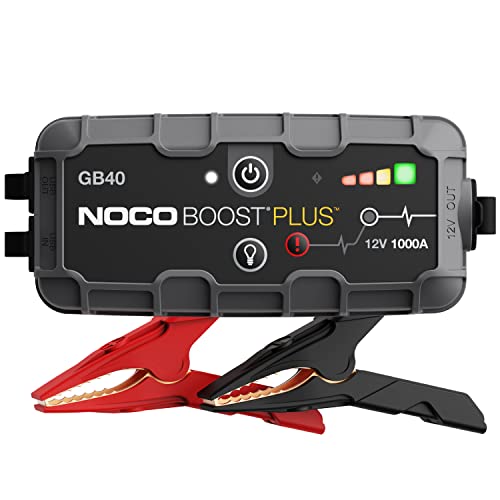
1,000A / ASIN B015TKUPIC
12V booster for up to 6.0L gas and 3.0L diesel. Spark-proof and reverse-polarity protection. USB power bank without 60W PD.
Less margin for larger trucks and diesels. Confirm exact engine displacement before buying.
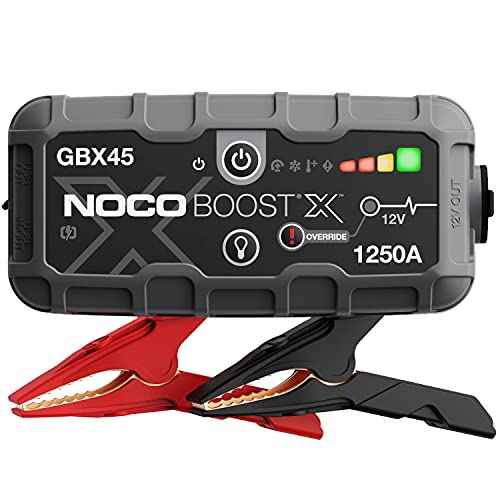
1,250A / ASIN B0924V8SPC
Rated for: up to 6.5L gas or 4.0L diesel, 60W USB-C PD, stated 48-minute full recharge, UltraSafe 2.0 clamp protection.
More capacity does not make an out-of-range vehicle safe to boost. Keep clamps and cable visible in storage.
Readiness
Decision checkpoints
Engine limit, clamp design, cable reach, reverse-polarity protection, charge retention, and operating temperature guidance decide whether the pack fits.
A lithium pack is stored equipment. Calendar-check before long trips and seasonal temperature swings. A dead pack in the trunk is not a recovery plan.
Leave margin for cold starts.
Battery buried under trim can make a short cable impractical.
Do not normalize a weak battery, charging problem, or parasitic draw.
FAQ
No. Engine type, displacement, battery condition, temperature, and connection quality still matter. Start with the manufacturer's engine limit.
Follow NOCO temperature and storage instructions. Protect from heat, moisture, and cargo impact.
Manual, gloves, reflective gear, pressure gauge, and a roadside plan alongside the booster.